
WELCOME BONUS 300%
UP TO €2000 + 100
FREE SPINS
UP TO €2000 + 100
FREE SPINS
Home → Blackjack
Blackjack at Versailles Casino: Variants, Rules and Payouts
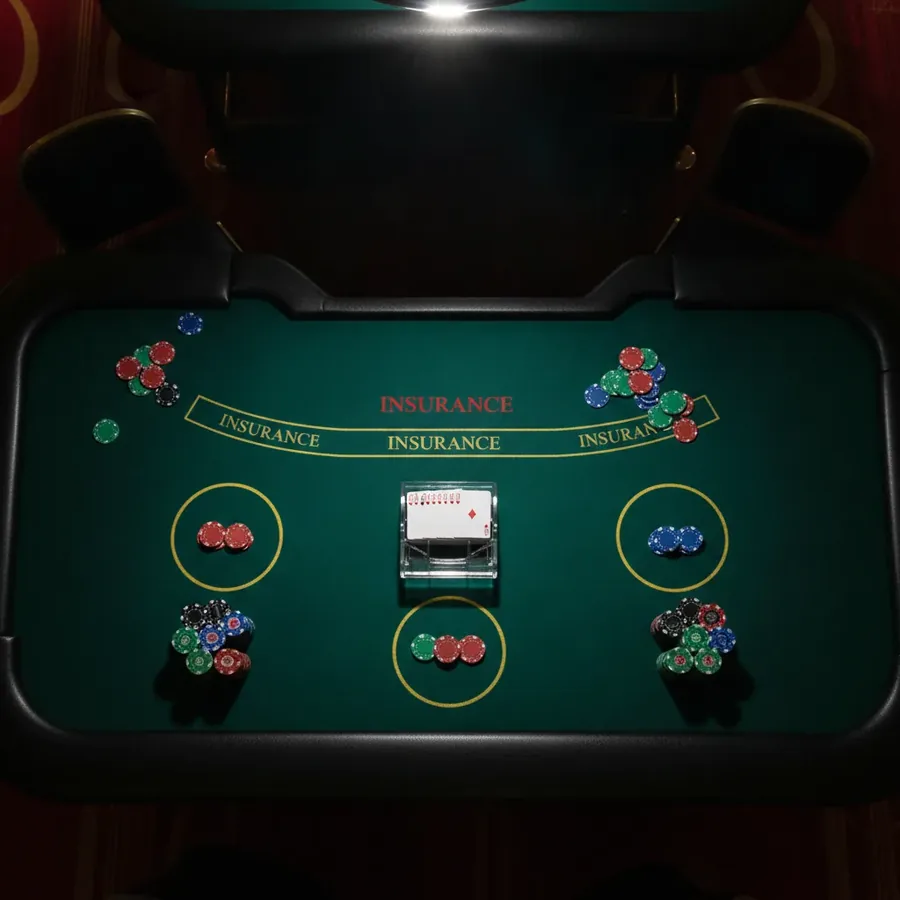
Blackjack Party runs with two hosts
The Evolution table titled Blackjack Party accommodates an unlimited number of players while the atmosphere is driven by two live hosts. This social structure contrasts sharply with Quantum Blackjack Plus Live, which restricts participation to a single player interacting with automated quantum multipliers. The presence of human hosts does not alter the underlying mathematical edge, but it defines the pacing of the shoe compared to digital variants.
Minimum bets at this specific party variant start at 1.00 EUR, allowing for low-stakes entry into the multiplayer environment. In comparison, Lightning Blackjack requires a minimum stake of 1 EUR but offers lightning multipliers up to 25x on winning hands. The higher ceiling for wagers in other tables often correlates with more complex side-bet mechanics that are absent here.
What doesn't count towards turnover at 10 percent?
Table games such as the various blackjack variants contribute only 10 percent toward the bonus wagering requirement. Slots, conversely, provide full credit at a rate of 100 percent per euro wagered. This disparity means that playing blackjack is significantly less efficient for clearing the 300% welcome bonus up to €2,000 than spinning the reels.
Blackjack Contributes Only 10 Percent to Wagering
Wagering 100 EUR on any blackjack table generates merely 10 EUR of progress against the total turnover target. To clear a standard 40x requirement on a 2,000 EUR bonus, a player would need to generate 80,000 EUR in turnover. If all funds were used on slots, the required volume would be identical, but the time and variance profiles differ drastically between the two categories.
Ignored Basic Strategy Chart: 1 Percent Wasted
Deviating from basic strategy on a six-deck game with S17 rules increases the house edge from 0.46 percent to roughly 1.46 percent. This one percentage point increase represents a substantial erosion of the theoretical return over thousands of hands. Players who ignore the chart effectively donate an extra percent of their bankroll to the casino compared to optimal play.
Double Down vs Simple Hit on 11
Choosing to double down on a hard 11 against a dealer ten maximizes the expected value compared to simply hitting or standing. While hitting risks busting or landing a weak total, doubling allows the player to capitalize on the statistical likelihood of drawing a ten-value card. This specific move is mandated by basic strategy charts for the 99.54 percent RTP configuration found in many standard tables.
Blackjack variants at a glance
| Variant | Payout | House edge | Rule | Bet range |
|---|---|---|---|---|
| Blackjack Insurance / Versicherung (6–8 Decks) | 92.53% | 7.47% | Separate Nebenwette bis 50% der Hauptwette, wenn der Dealer ein Ass hat. Basisstrategie schreibt IMMER Ablehnung vor (außer Karten zählen bei True Count ≥ +3). Bei einem Deck Vorteil ≈ 5.88% | Insurance 2:1 |
| Blackjack Split / Double / H17 – Regel-Effekte | n.a. (Regel-Modifikatoren) | H17 +0.22 Prozentpunkte; RSA −0.08 Prozentpunkte; DAS −0.14 Prozentpunkte | Dealer Hits Soft 17 verschlechtert RTP um 0.22 Prozentpunkte; Resplit Aces verbessert um 0.08 Prozentpunkte; Double After Split verbessert um ca. 0.14 Prozentpunkte; 6 Decks statt 8 – ca. 0.02 Prozentpunkte. | Double – Einsatz ×2 mit einer Karte; Split – bis 4 Hände; Ass-Split meist mit einer Karte. |
| Blackjack Liberal Vegas Strip (liberale Regeln, 3:2) | 99.72% | 0.28% | Günstigste Regelkombination: S17 + DAS + Resplit + Late Surrender. Standardabweichung 1,15 | Blackjack 3:2, Gewinn 1:1 |
| Blackjack Surrender (Late Surrender) – Regel-Effekt | n.a. (Regel-Modifikator) | −0.08 Prozentpunkte | Spieler gibt Hand nach Dealer-Blackjack-Prüfung auf, verliert die Hälfte des Einsatzes. Verbessert RTP um ca. 0.08 Prozentpunkte. Early Surrender ist wesentlich wertvoller (bis −0.6 Prozentpunkte), aber extrem selten. | Rückzahlung 50% des Einsatzes |
| Blackjack 6 Decks, S17, DAS, DOA, Auszahlung 3:2, Basisstrategie | 99.54% | 0.46% | Dealer steht auf Soft 17; Verdopplung auf jeder Zweierkarte; Verdopplung nach Split erlaubt; keine Aufgabe. Basisstrategie ist für diesen Wert zwingend | Blackjack 3:2, normaler Gewinn 1:1, Insurance 2:1 |
| Blackjack Ein Deck, klassische Regeln, 3:2 | 99.85% | 0.15% | Weniger Decks = niedrigerer Vorteil; ein Deck gibt ca. −0.48 Prozentpunkte gegenüber 8 Decks. Oft durch 6:5 Auszahlung kompensiert. | Blackjack 3:2, Gewinn 1:1 |
Chose Wrong Table for 5 EUR Bankroll
The Blackjack Liberal Vegas Strip variant offers a house edge of 0.28% with an RTP of 99.72%, requiring a 3:2 payout structure for optimal returns. This edge is significantly lower than the 1.85% house edge found on tables paying 6:5, which erodes bankrolls twice as fast during standard play sessions. A 5 EUR bankroll survives longer at the liberal table but depletes rapidly if the player encounters the inferior 6:5 payout ratio without adjusting bet sizes accordingly.
Insurance bets carry a steep 7.47% house edge and an RTP of only 92.53%, making them mathematically detrimental to any short-term strategy or small bankroll management plan. The separate side bet pays 2:1 but demands a True Count of +3 or higher to become profitable, a condition rarely met by casual players using basic strategy alone. Taking insurance on a standard hand drains the initial 5 EUR stake much faster than adhering to the base game rules without side wagers.
Quantum Blackjack Plus Live features quantum multipliers up to 1,000x but operates with a 99.57% RTP that requires optimal strategy to maintain its theoretical value against the house. The betting range spans from 1 to 5,000 EUR, allowing small stakes but exposing the player to high-variance outcomes that can wipe out a tiny bankroll in minutes. Players must balance the potential for massive multipliers against the statistical reality that most hands result in standard payouts rather than the rare high-value combinations.
How many decks are in the shoe?
Blackjack Liberal Vegas Strip typically utilizes between six and eight decks, a configuration that establishes a baseline house edge of 0.28% when paired with favorable rules like S17 and DAS. Using fewer decks generally reduces the casino advantage, yet single-deck games often compensate by offering only a 6:5 blackjack payout instead of the standard 3:2 ratio. This trade-off shifts the house edge upward significantly despite the mathematical benefit gained from having less card composition complexity in the shoe.
A single-deck game with classic rules and a 3:2 payout delivers an exceptionally low 0.15% house edge and an RTP of 99.85%, representing one of the most player-friendly environments available online. However, this advantage is negated if the table switches to a 6:5 payout structure, which instantly raises the house edge to 1.85% and drops the RTP to 98.15%. The difference between these two payout structures adds exactly 1.39 percentage points to the casino's advantage, outweighing the benefit of playing with just one deck.
Six-deck shoes with standard rules like S17, DAS, and DOA present a 0.46% house edge and an RTP of 99.54%, providing a middle ground between single-deck efficiency and multi-deck availability. The use of multiple decks increases the difficulty of card counting and slightly elevates the house advantage compared to single-deck variants with identical rule sets. Players seeking the lowest possible house edge should prioritize tables with liberal rules over those simply offering fewer decks if the payout ratio remains unfavorable.
Shoe, Cut Card, and 75 Percent Penetration
Live dealer tables such as Quantum Blackjack Plus operate with specific penetration depths that influence the effectiveness of strategy adjustments and card counting techniques throughout the dealing process. While exact cut card positions vary by provider, deeper penetration allows players to observe more cards before reshuffling, potentially improving decision-making accuracy in later rounds. Shallow penetration limits the window for advantageous play, forcing reliance on static basic strategy regardless of the remaining deck composition.
Evolution's Lightning Blackjack employs a distinct dealing procedure where lightning multipliers up to 25x are applied to random hands, altering the variance profile without changing the underlying 99.56% RTP. The betting limits range from 1 to 2,500 EUR, accommodating various stake levels while maintaining a consistent shuffle cycle after each round concludes. Players must adapt their bet sizing to account for the high volatility introduced by these random multipliers, which can drastically alter session outcomes independent of strategic skill.
Table penetration directly impacts the potential return for players employing advanced strategies, as seeing more cards improves the precision of deviation decisions based on the true count. Standard industry practices often aim for approximately 75% penetration to balance security concerns with player advantage opportunities in live dealer environments. Insufficient penetration renders counting ineffective, reducing all gameplay to reliance on the fixed house edge determined by the initial rule set and payout ratios.
16 vs 10 played incorrectly: most common error
Basic strategy mandates hitting hard 16 against a dealer ten, a counterintuitive move that minimizes long-term losses compared to the statistically inferior alternative of standing on that same total. Standing on 16 results in a higher expected loss per hand because the dealer busts less frequently against a ten-upcard than the player expects from anecdotal experience. Adhering to the prescribed hit strategy preserves capital better over thousands of hands, whereas emotional decisions lead to rapid bankroll depletion.
Late surrender is a valuable rule option that allows players to forfeit half their bet when holding a hard 16 against a dealer ten, effectively reducing the house edge by 0.08 percentage points. This rule modification provides a safety valve that standard hitting does not offer, lowering the overall risk exposure for the player in unfavorable situations. Tables lacking late surrender force players to hit into stiff dealer hands, increasing the frequency of negative outcomes compared to games where surrender is permitted.
The presence of specific rules like Resplit Aces and Double After Split subtly alters the optimal approach to difficult hands, though they do not change the fundamental requirement to hit 16 versus 10. These modifiers improve the overall RTP by small margins, such as 0.08% for resplitting aces, but cannot justify deviating from core strategy on marginal totals. Maintaining discipline in these scenarios ensures that the cumulative benefit of favorable rules translates into actual financial preservation rather than wasted opportunity.
Splitting Eights vs Standing on 16
Splitting a pair of eights converts a weak total of 16 into two potentially strong starting hands of eight, fundamentally altering the probability distribution of the outcome for that round. Standing on 16 leaves the player vulnerable to the dealer's likely strong final total, whereas splitting offers two chances to recover from the initial poor deal. This strategic divergence is critical for minimizing the impact of bad cards and maximizing the utility of every hand dealt during a session.
The house edge for the liberal Vegas Strip variant stands at 0.28%, a figure heavily dependent on players executing correct split decisions alongside other basic strategy moves. Incorrectly standing on eights or splitting inappropriate pairs like fives significantly increases the effective house edge, eroding the advantage provided by the game's favorable rules. Consistent adherence to splitting protocols ensures that the theoretical RTP of 99.72% remains achievable over extended periods of play.
Variants like Blackjack Party and Lightning Blackjack introduce different atmospheric elements and multiplier mechanics but retain the core mathematical necessity of splitting eights against most dealer upcards. Evolution's tables maintain a 99.56% RTP, relying on players to follow standard splitting guidelines to preserve this theoretical return amidst high-volatility features. Deviating from established splitting strategies in these live environments compounds the disadvantage, leading to faster bankroll exhaustion than observed in standard RNG counterparts.
Live Table vs RNG Table: Speed and Limits
Quantum Blackjack Plus Live from Playtech imposes a maximum stake of 5.000 EUR per round, which is five times higher than the 1.000 EUR cap on Evolution’s Lightning Blackjack. This higher ceiling allows high-rollers to expose larger capital during standard play without hitting the table limit prematurely. Players using the 300% welcome bonus up to €2,000 must account for the fact that table games contribute only 10% to wagering requirements, making turnover slower compared to slots.
Lightning Blackjack features multipliers up to 25x on winning hands, whereas Quantum Blackjack Plus offers multipliers reaching 1.000x on specific three-card combinations totaling 21 points. The latter provides a significantly higher potential payout variance despite both games sharing a similar house edge around 0.46%. A player betting the minimum 1 EUR can theoretically trigger the top multiplier, but the probability remains extremely low compared to standard payouts.
Evolution’s Blackjack Party accommodates an unlimited number of players simultaneously, contrasting with the fixed seat capacity typical of RNG tables. This structural difference means decisions are paced by the dealer’s rhythm rather than individual click speeds, affecting the number of hands played per hour. Since live dealer games also count only 10% toward the bonus turnover, completing the wagering requirement takes substantially longer than on digital variants.
Why Loss Progression Quickly Reaches Table Limit
A single losing hand in Blackjack pays out at 1:1, meaning a 100 EUR loss reduces the bankroll by exactly that amount without compensation. When applying the Martingale strategy where bets double after each loss, a streak of six consecutive defeats turns a 1 EUR start into a 64 EUR bet, and seven losses require 128 EUR. On a table with a 1.000 EUR limit, this progression fails before exhausting a typical bonus balance, exposing the player to significant risk.
The 300% welcome bonus up to €2,000 requires substantial turnover due to the 10% contribution rate for table games. Wagering the full 2.000 EUR bonus amount at a 40x requirement creates 80.000 EUR in total turnover needed, but only 8.000 EUR counts if playing blackjack. This slow accumulation forces players to place more bets to clear funds, increasing the statistical likelihood of hitting the table maximum during a losing streak.
Quantum Blackjack Plus allows stakes between 1 and 5.000 EUR, providing more flexibility than the 1–2.500 EUR range of Lightning Blackjack. However, even with higher limits, the exponential growth of doubled bets quickly consumes available funds or hits the cap. A player starting with 100 EUR and doubling after four losses reaches a required stake of 16 EUR, demonstrating how rapidly small deficits escalate into unmanageable positions.
How much time is left for the decision?
RNG versions of Blackjack 6 Decks operate continuously without external interruptions, allowing players to make decisions instantly based on their own pace. In contrast, Evolution’s Lightning Blackjack enforces strict timers for actions like hitting, standing, or splitting, which vary depending on the dealer’s speed and game flow. Missing these deadlines results in an automatic default action, usually a stand, which may lead to suboptimal outcomes against a dealer showing a strong card.
The theoretical return to player (RTP) of 99.57% for Quantum Blackjack Plus assumes perfect strategic execution within the allotted timeframes. Deviating from basic strategy due to time pressure increases the house edge, potentially lowering the actual return below the advertised figure. Players relying on the 100 free spins included in the offer might find the slot gaming faster, as spin outcomes are instantaneous without decision windows.
Live dealer tables like Blackjack Party involve two moderators who interact with players, adding latency to the game cycle compared to pure software solutions. This social element extends the duration of each round, reducing the number of hands completed per hour. For users trying to meet wagering requirements with limited bonus funds, the slower pace of live games makes clearing the balance more challenging than automated alternatives.
Ace Split: only one card per hand
Most standard rules permit splitting Aces to create two new hands, but typically allow only one additional card to be drawn on each split Ace. This restriction prevents players from forming multiple blackjacks or improving weak hands further, limiting the upside of this favorable rule. The Blackjack 6 Decks variant follows this convention, ensuring that while the split is allowed, the potential for immediate profit is capped.
Resplitting Aces is often prohibited or treated as a separate modifier that improves the RTP by approximately 0.08 percentage points. If a casino does not allow resplitting, the house edge increases slightly compared to liberal Vegas Strip rules which include this feature. Players should verify if the specific live table supports resplits, as many Evolution and Playtech games restrict this action to maintain their mathematical advantage.
The insurance side bet pays 2:1 when the dealer shows an Ace, but its RTP drops to 92.53% due to a high house edge of 7.47%. This negative expectation makes insurance a poor choice unless the player is counting cards and holds a true count of +3 or higher. For general players using the welcome bonus, avoiding insurance preserves the bankroll better than taking a side bet with such unfavorable odds.
When does the table max bet apply?
The maximum bet limits differ significantly across providers, with Playtech’s Quantum Blackjack Plus capping stakes at 5.000 EUR per round. Evolution’s Lightning Blackjack restricts wagers to a maximum of 2.500 EUR, half the limit of the Playtech alternative. These caps define the upper boundary of exposure, preventing any single hand from exceeding the stated monetary value regardless of the player’s balance.
Assuming a standard 5% rule, a 2.000 EUR bonus would restrict bets to 100 EUR until turnover is complete. Exceeding this hypothetical limit could result in forfeiture of the bonus and associated winnings, making adherence to table limits critical for compliance.
Table limits also influence the effectiveness of progressive betting systems, which rely on increasing stakes after losses to recover previous deficits. A 5.000 EUR cap allows for deeper progression than a 2.500 EUR limit before hitting the barrier. Players utilizing the 300% bonus must navigate these constraints carefully, as the lower contribution rate of table games already slows progress toward unlocking the full bonus amount.
Contact
Live - online chat
Banking









Providers












Versailles Casino 2026